By pairing the information in Sacred Harp minutes publications with GPS coordinates, we are mapping Sacred Harp singing’s changing geography.
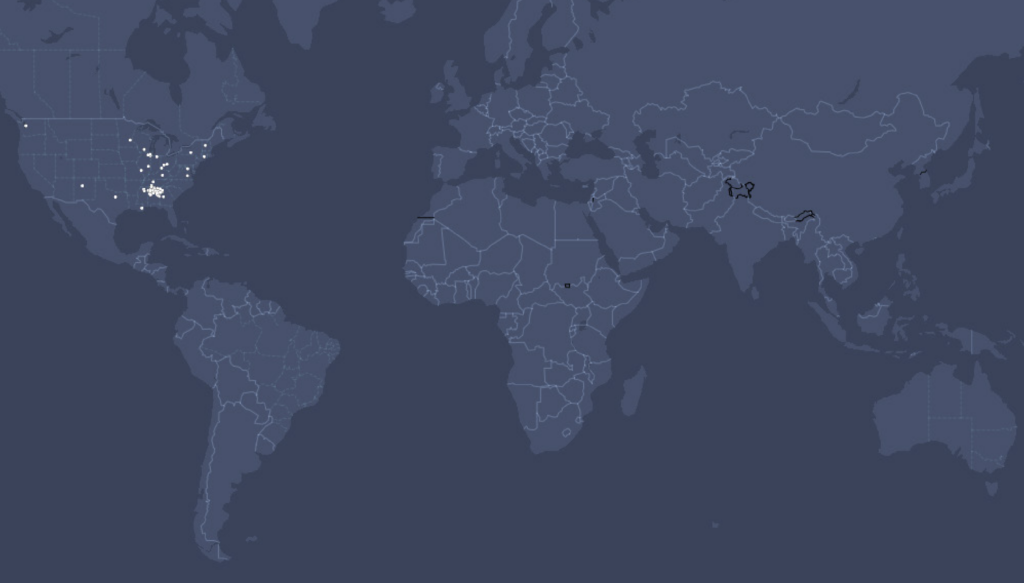
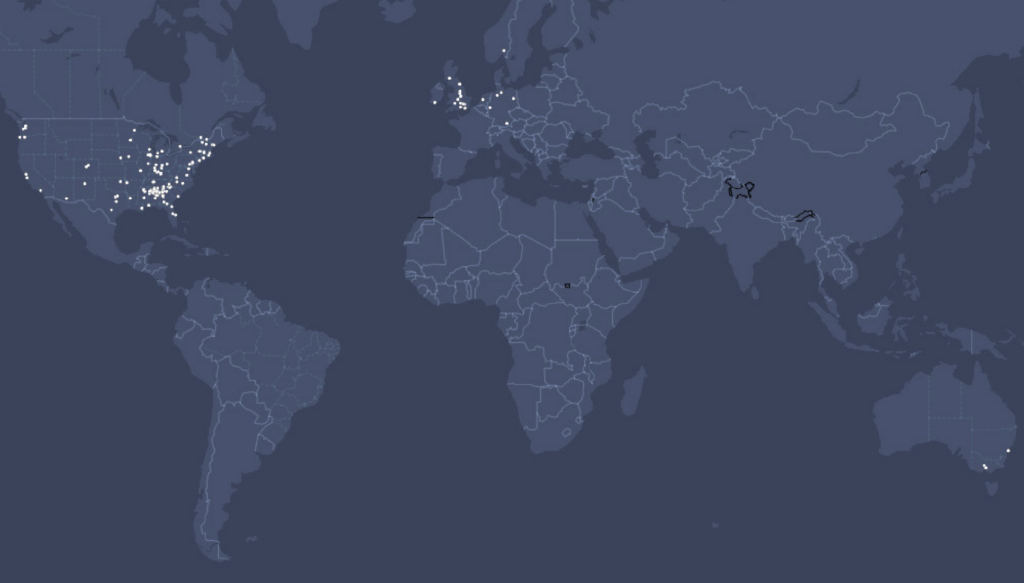
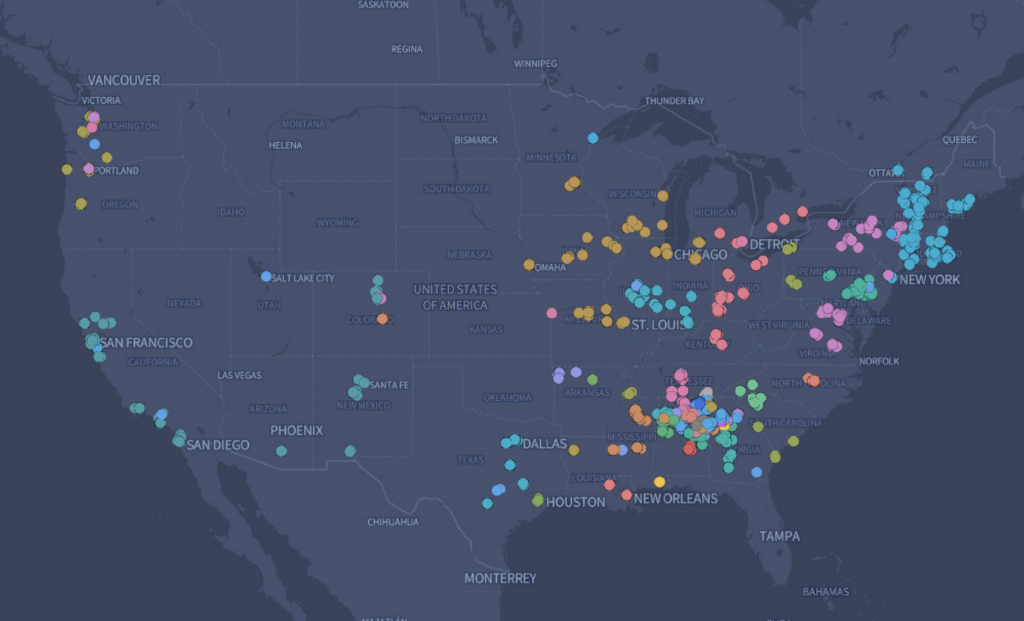
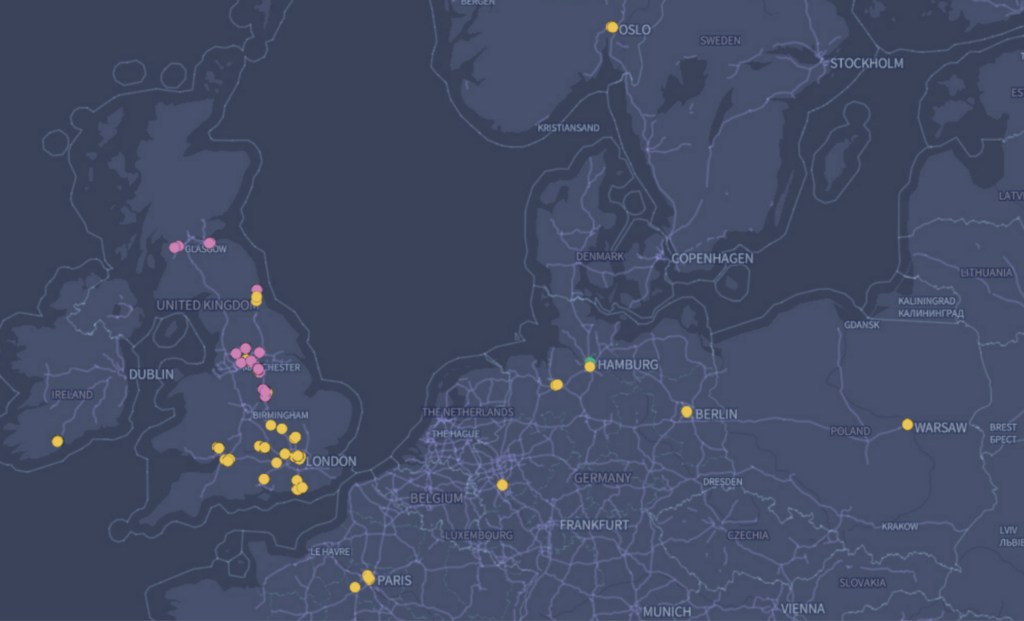
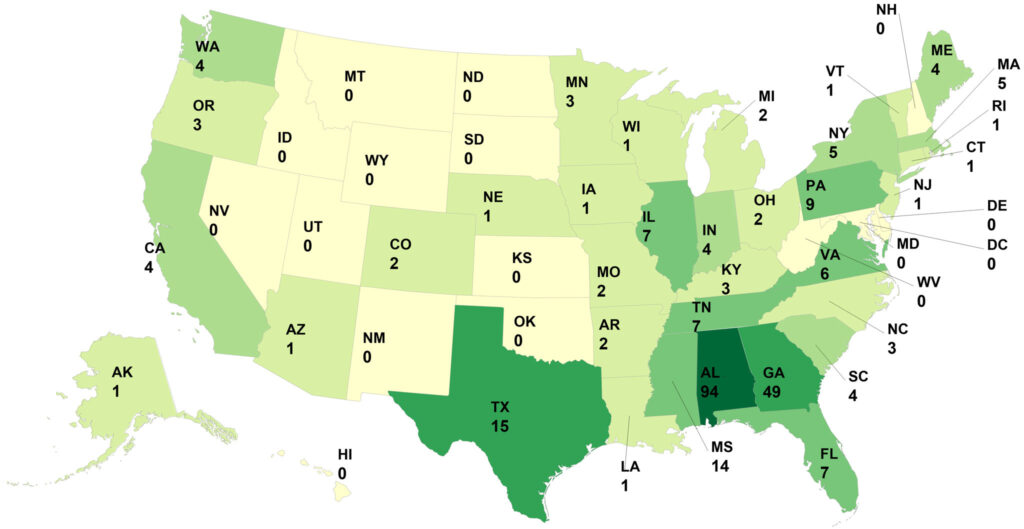
For its first hundred and twenty years, Sacred Harp singing was confined almost exclusively to six states in the southeastern United States: Alabama, Georgia, Mississippi, Texas, Florida, and Tennessee. Beginning in the 1970s, with the support of southern singers, singers in other parts of the country began forming their own conventions, modeled closely on the long-established format of historical singings. Growth in Sacred Harp outside the South since that time has been continually accelerating. Our team is using Sacred Harp Minutes Research Data including singing location names and corresponding GPS coordinates we have collected to map Sacred Harp singing’s recent spread.
For most of the twentieth century, minutes were published almost exclusively for singings in the six states named above; the 1985 “big minutes” documented singings in just two additional states: Kentucky and Connecticut. By 1995, there were entries for 175 singings, thirty of which took place in eighteen states outside the original six. The minutes for 2015 include a total of 289 singings. Alabama still holds the most, with ninety-two, but ninety-five singings took place in twenty-seven US states outside Sacred Harp’s pre-1970s territory. In addition, the 2015 minutes include thirty-three singings held across seven countries outside the United States.
Project team members have published research mapping Sacred Harp singings using the minutes in American Periodicals and Southern Spaces.
Project Team
- Nathan Rees, lead researcher
- Jesse P. Karlsberg, lead researcher
- Mark T. Godfrey, lead developer
- Robert A. W. Dunn, GIS specialist