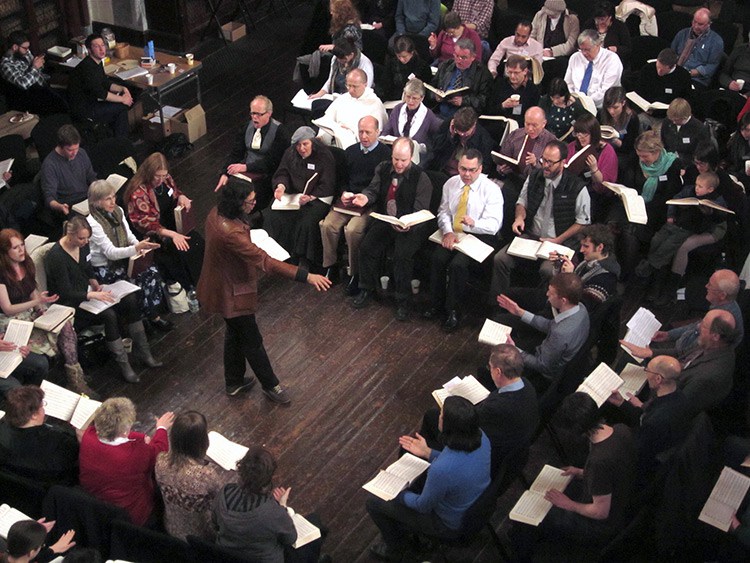
Sacred Harp Minutes Research Data is curating a growing collection of humanities research data from the proceedings of Sacred Harp singings, making it possible for scholars and singers to ask a range of new questions about how participants in this music tradition engage its repertoire across time and space.
The project is a collaboration between:
- Emory University‘s Emory Center for Digital Scholarship (ECDS) and Pitts Theology Library,
- The University of West Georgia,
- The Sacred Harp Publishing Company (SHPC), and
- The Sacred Harp Musical Heritage Association (SHMHA),
Sacred Harp Minutes is directed by Jesse P. Karlsberg, ECDS senior digital scholarship strategist and vice president of SHPC. Mark T. Godfrey, chief technology officer at Shred Video and a member of SHMHA’s minutes book team, is the project’s technical lead. The project team includes an advisory board and a large group of volunteers.
Accessing Available Minutes
The project has released its first set of data, comprising records of Sacred Harp singings held between 1992 and 2025, during the period when The Sacred Harp: 1991 Edition was in use. Future releases will include more than 15,000 singings dating back to 1945, including data from fifty annual volumes recently digitized by Emory’s Digitization Program and more than twenty-five born digital volumes, and thousands of additional singings from rare booklets and pamphlets dating from the early twentieth century to the early twenty first century.
- Access Sacred Harp minutes data from 1992–present through the Fasola Minutes iOS app.
- Access Sacred Harp minutes data from 1995–present through Fasola.org’s minutes search.
While we work to make additional minutes public, interested singers and researchers are welcome to contact us for access to uncorrected minutes from specific singings or years.
Team members and collaborators are undertaking a range of projects exploring how Sacred Harp minutes research data can help singers and scholars follow their interests. These projects aim to help people more about our participation in this singing tradition; ask and answer questions about Sacred Harp’s geography, population, and repertoire; and improve our ability to identify songs in historical recordings and study elements of their music.
The Minutes
Sacred Harp is a style of social hymn-singing in four-part a cappella harmony. A form of shape-note singing, Sacred Harp uses a music notation system that aids in sight-singing in which notes of different pitches feature different shapes corresponding with the syllables “fa,” “sol,” “la,” and “mi.” Singers use a tunebook titled The Sacred Harp at “singing conventions” where participants take turns leading the group in a song or two of their choice.
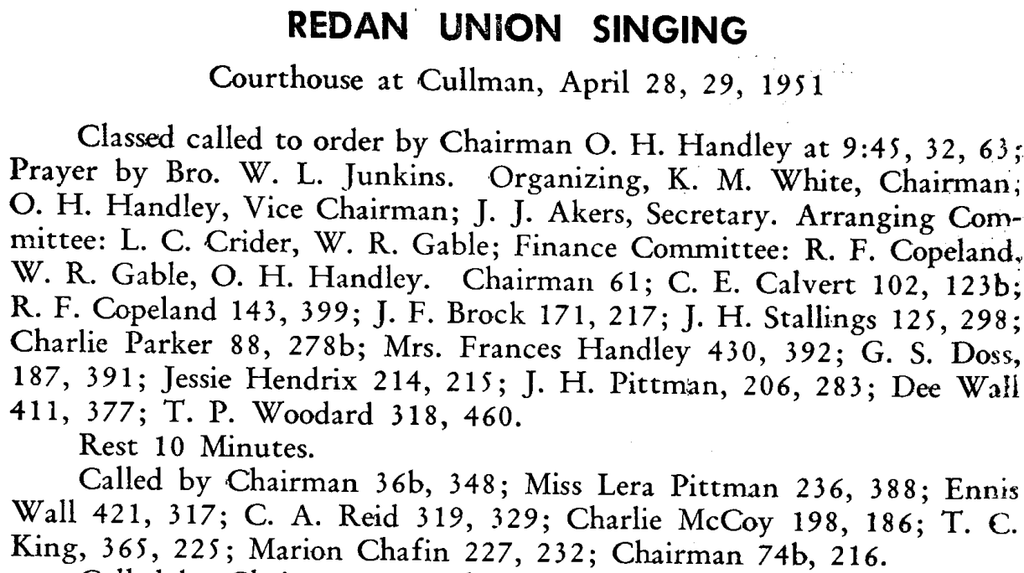
Since the book’s first publication in 1844, secretaries have recorded and published “minutes,” listing the the names of leaders and, often, the page numbers of their chosen songs from The Sacred Harp at these singings. Published in an annual volume known colloquially as the “big minutes” since 1945, the minutes comprise a remarkably granular and comprehensive record of the decentralized lived experience of a music culture across its community of practice. Since 1995, this minutes book has been edited and published by SHMHA using a born-digital process. The minutes represent an extraordinary effort undertaken by thousands of secretaries who recorded the proceedings at Sacred Harp singings across generations.
Phase One: The 1991 Edition
The recent introduction of The Sacred Harp: 2025 Edition presents an opportunity to explore singings, songs, and singers during the entire period when a past edition of the shape note songbook was in use: the thirty-four year period when The Sacred Harp: 1991 Edition was the primary book used at singings.
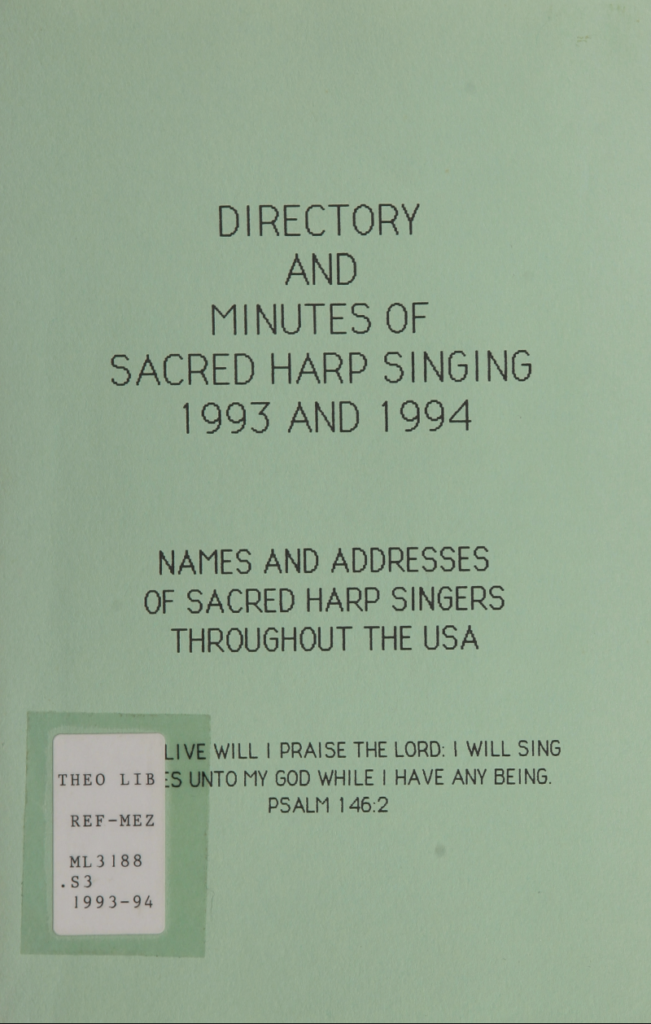
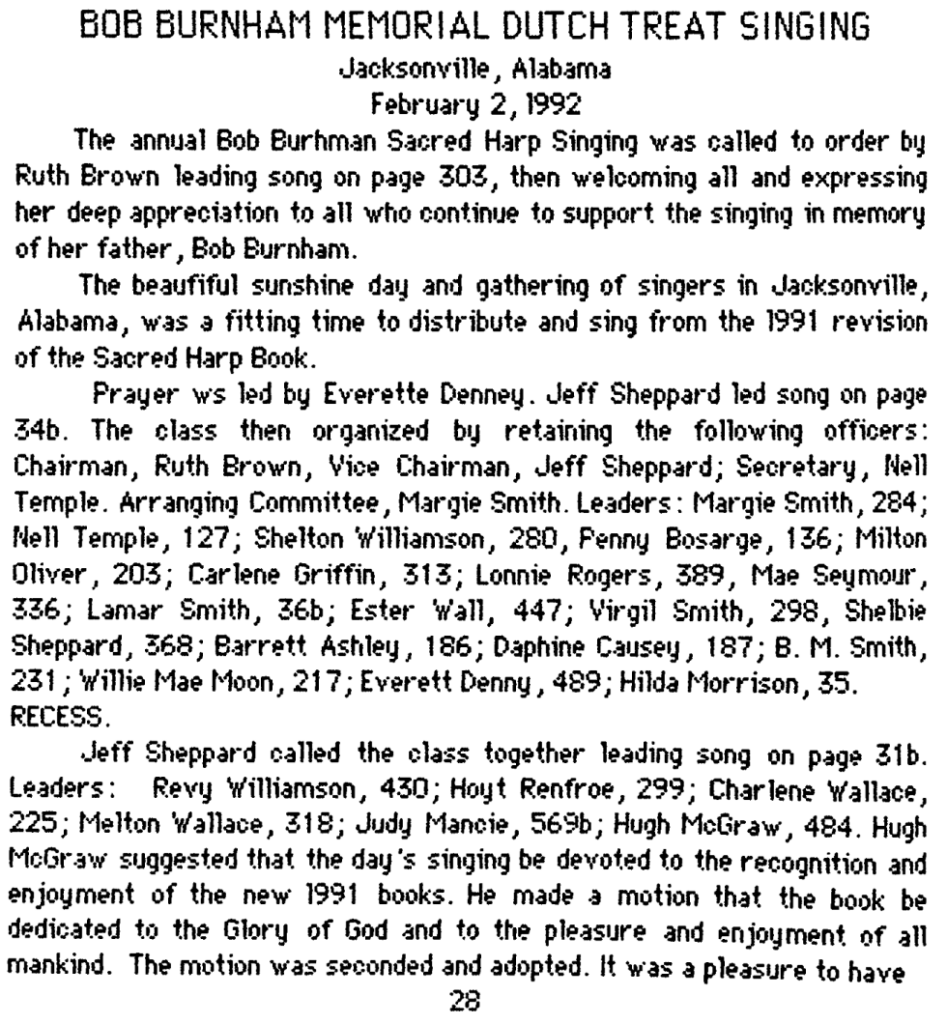
Amid ongoing work identifying, digitizing, and curating research data for a large number of minutes publications, we prioritized preparing the minutes from this thirty-four year period for publication and analysis. These minutes are drawn from:
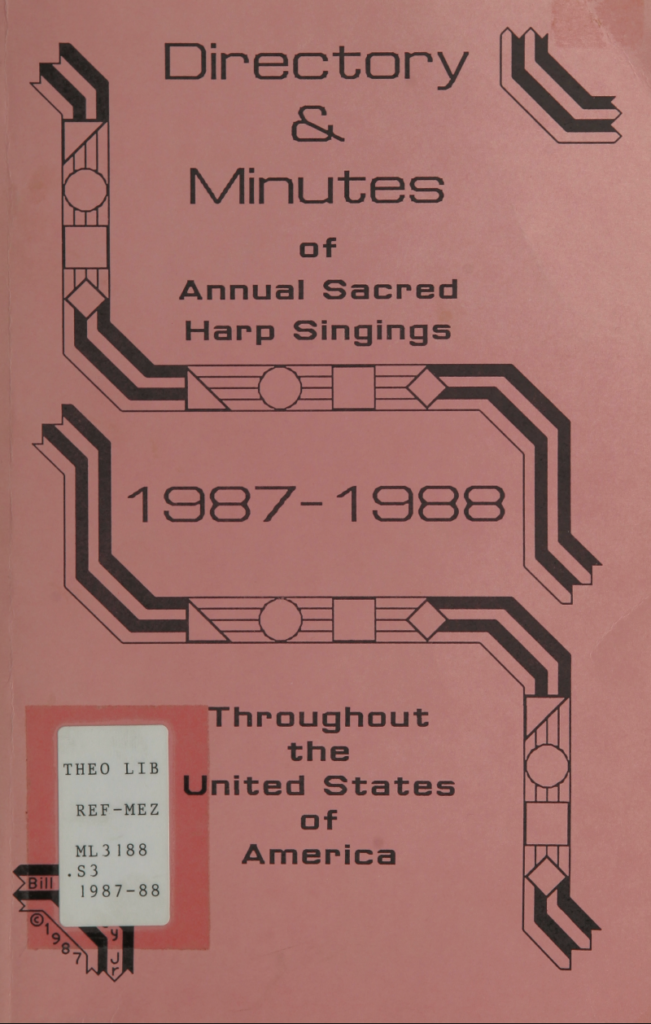
- Thirty-one born-digital annual volumes edited and published by SHMHA. These volumes date from 1995–2025.
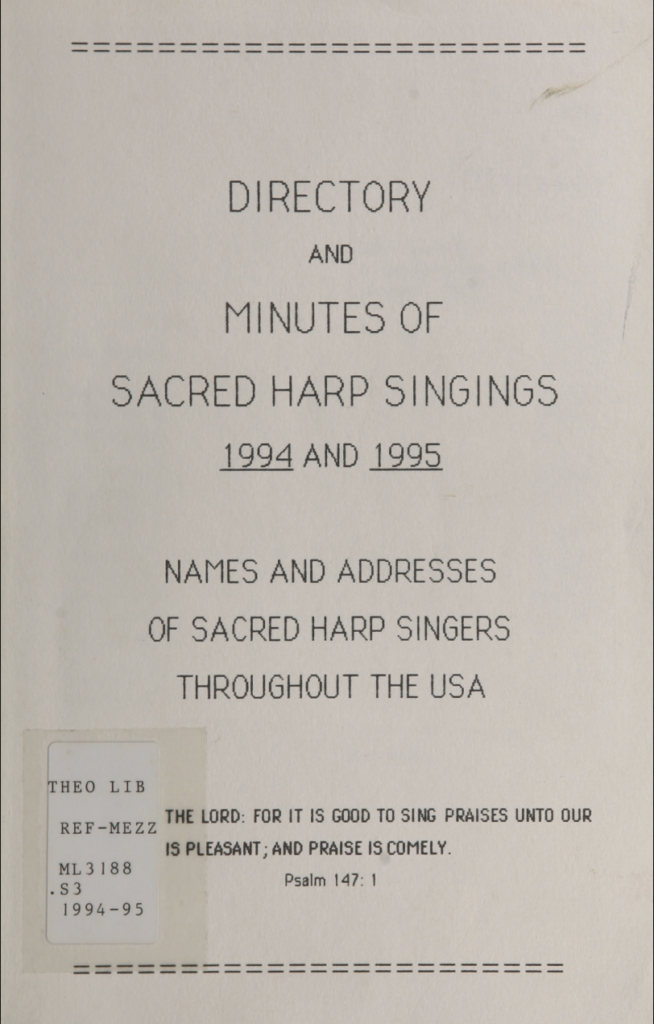
- Copies of three annual volumes published by SHPC in the Pitts Theology Library Reference collection. These volumes date from 1992–1994.
Preparing the three printed volumes for inclusion involved digitization, optical character recognition, and manual correction of minutes information. Digitized and born digital volumes were then parsed using a custom script and a set of thousands of name corrections submitted by volunteers from the Sacred Harp singing community, Erin Fulton and Leigh Cooper. This phase of the project received a seed grant from the Atlanta Interdisciplinary AI Network.
This set of minutes research data was published though the Fasola Minutes iOS app in July 2026. Its publication coincided with a presentation by Jesse P. Karlsberg and Mark T. Godfrey at Camp Fasola sharing early analysis and visualizations drawing on the data.
Phase Two: The “Big Minutes”
Drawing on the methods piloted during phase one, we are now working to make the complete fifty-volume series of the “big minutes” prior to the shift to born digital production accessible. These minutes publications date from 1945 through 1994. We identified copies of all of the minutes books in this series from four sources:
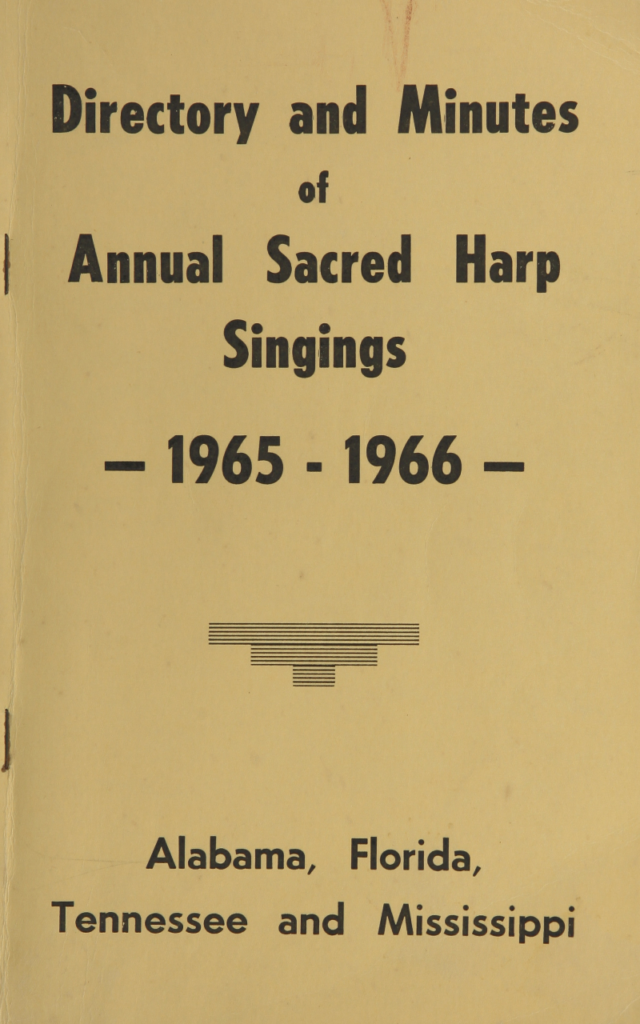
- Thirty annual volumes in the Pitts Theology Library Theology Reference collection published by SHPC and a consortium of Alabama singing conventions. These volumes date from 1961 and 1966–1994.
- Twelve volumes at the Annie Belle Weaver Special Collections of the Ingram Library of the University of West Georgia. These volumes date from 1952–55, 1957–60, 1962, and 1965.
- Six annual volumes in the private collection of Roma Rice and Margaret Keeton, Sacred Harp singers from West Alabama. These volumes date from 1945–1946, 1948–1949, 1951, and 1956.
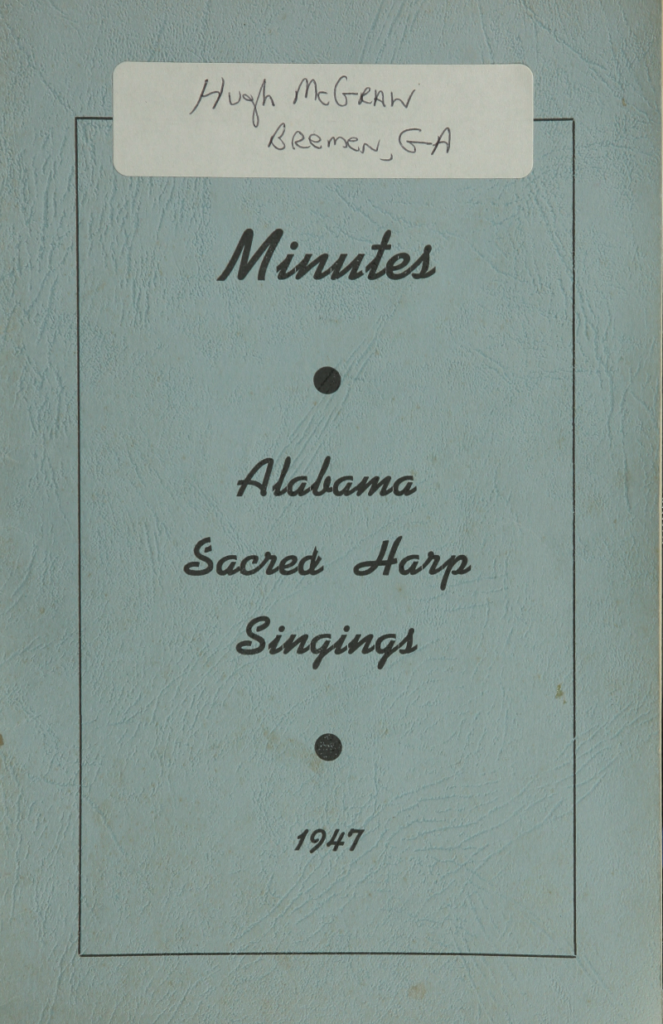
- Four volumes held by the Sacred Harp Museum of the SHPC. These volumes date from 1947, 1950, and 1963–64.
Our process includes digitization, optical character recognition, manual correction, assembly of metadata, and parsing. The team has completed digitization and optical character recognition of all fifty annual volumes. Volunteers from the Sacred Harp singing community are now helping to manually correct the minutes in these books.
If you are interested in helping review and correct minutes, please get in touch!
Phase Three: Regional Minutes Booklets
Even as we work to make annual volumes of the “big minutes” available, we have already begun identifying and digitizing smaller, often pamphlet-bound, volumes produced by state, regional, and local Sacred Harp singing conventions and associations. We have already documented over 200 extant minutes booklets from more than three dozen different singing bodies dating from 1904 to 2004. These minutes were preserved in the collection of the Sacred Harp Museum, in private collections, and at university and public libraries and archives. These booklets are often extraordinarily rare, with just a single copy having been passed down through generations. We have already digitized more than 100 of the booklets the project has documented.
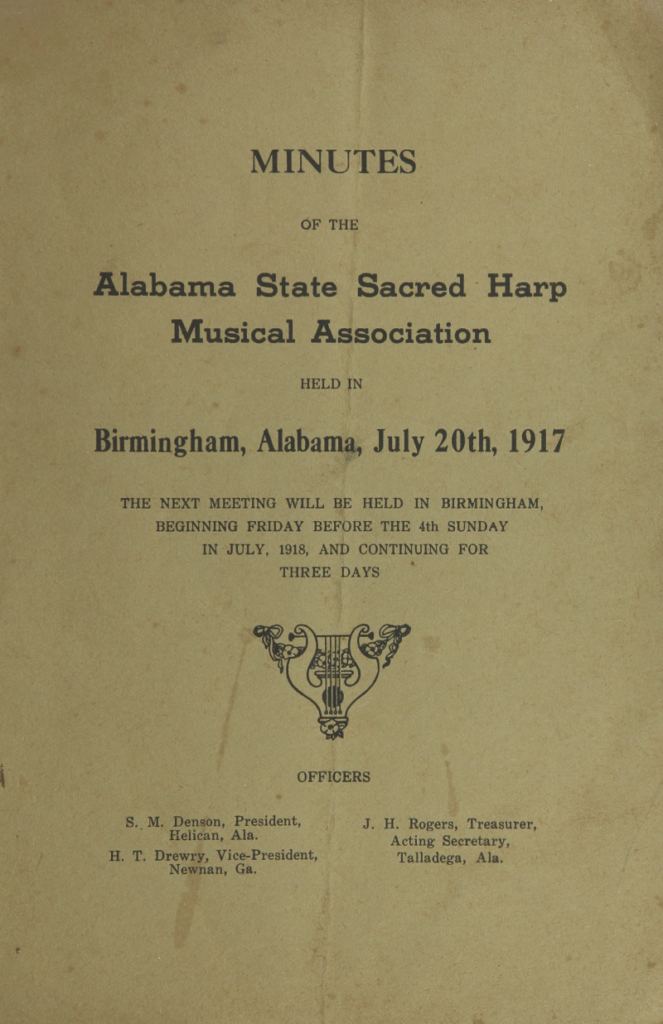
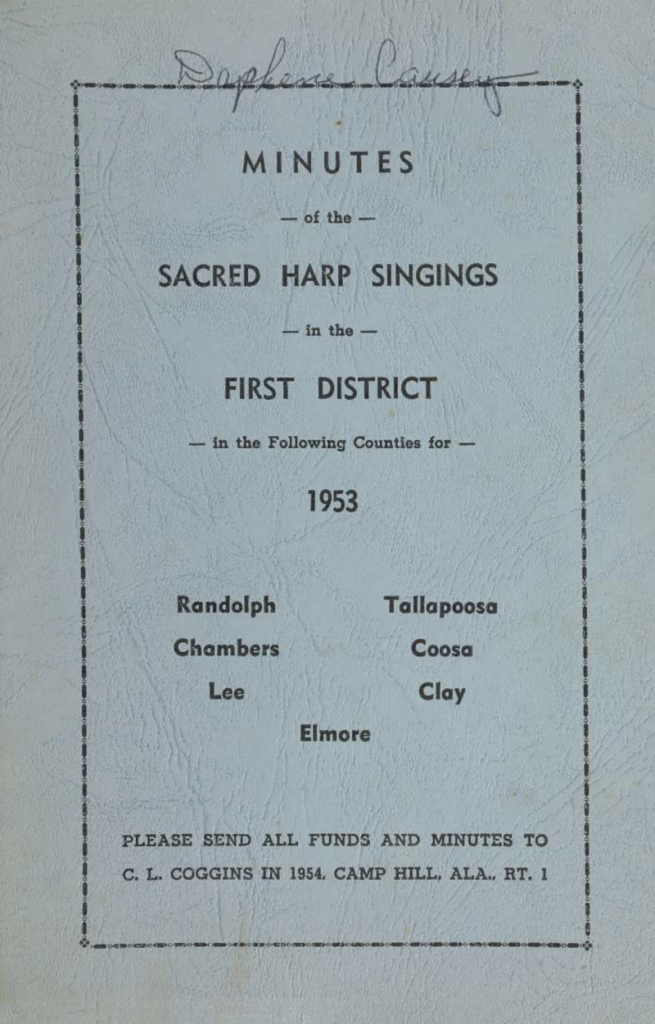
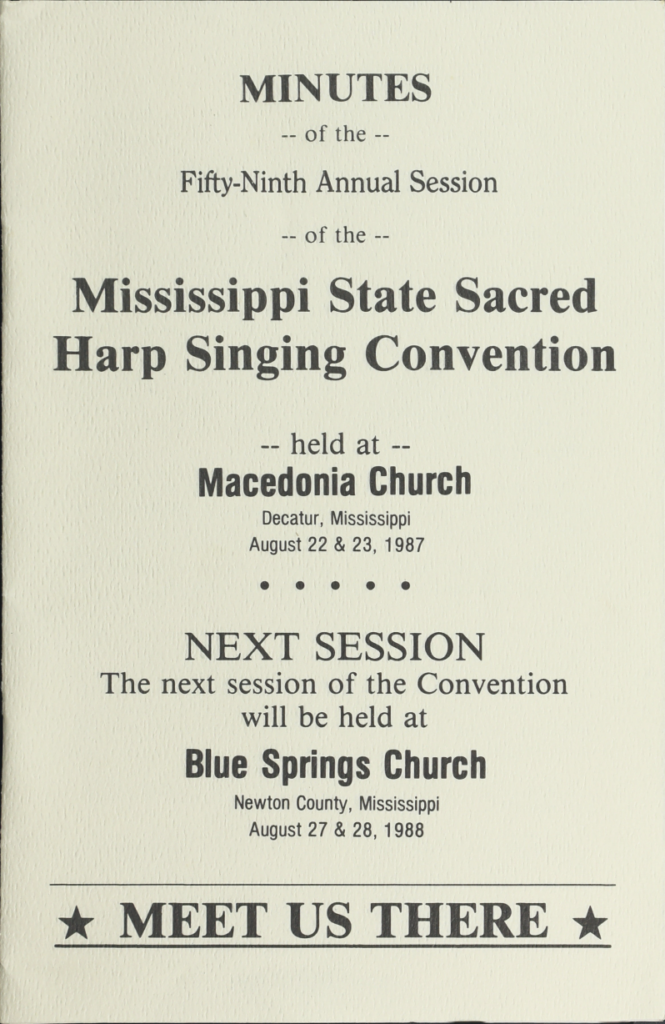
Please let us know if you have copies of Sacred Harp minutes pamphlets you would be willing to loan for digitization!