Emory University’s Mass Digitization Program has completed digitization of the complete fifty-volume set of “Big Minutes,” comprising annual volumes published between 1945 and 1994.
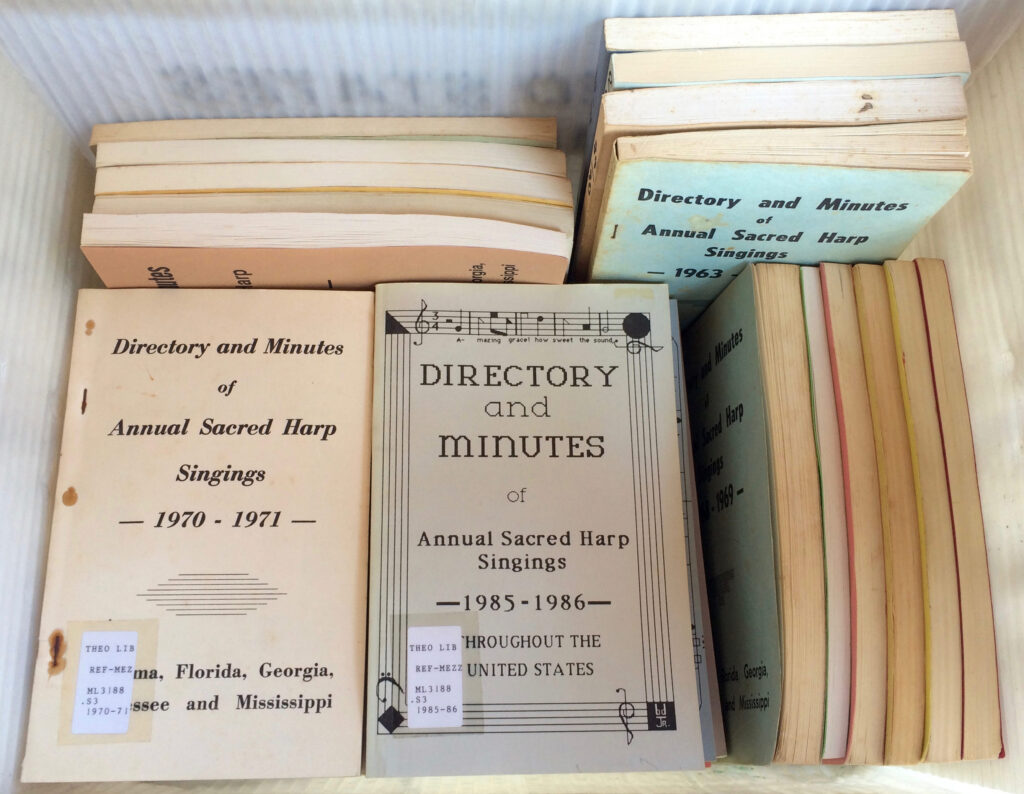
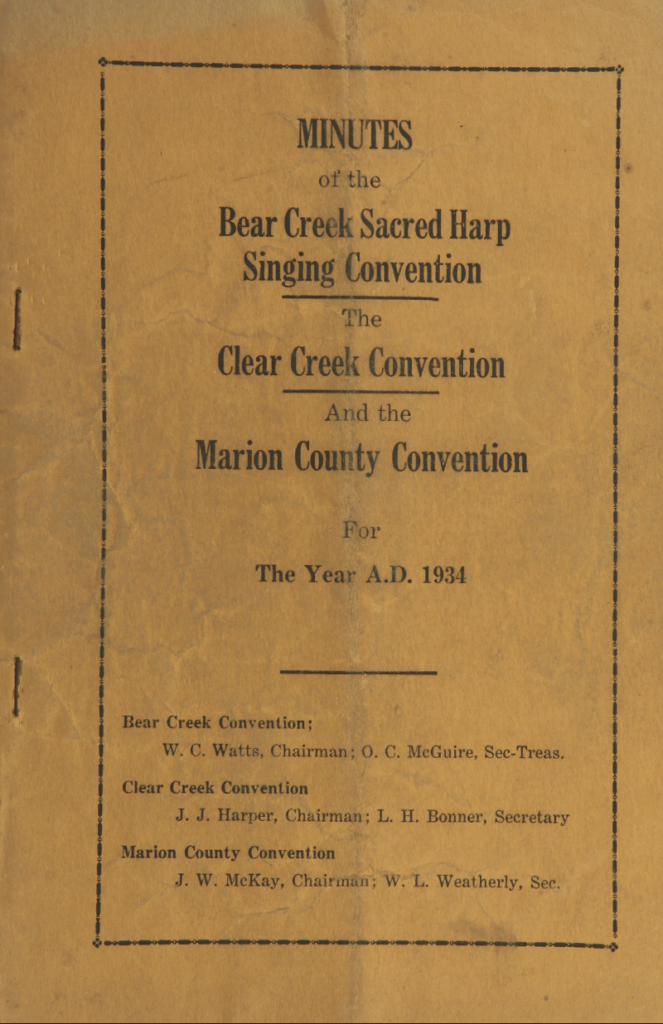
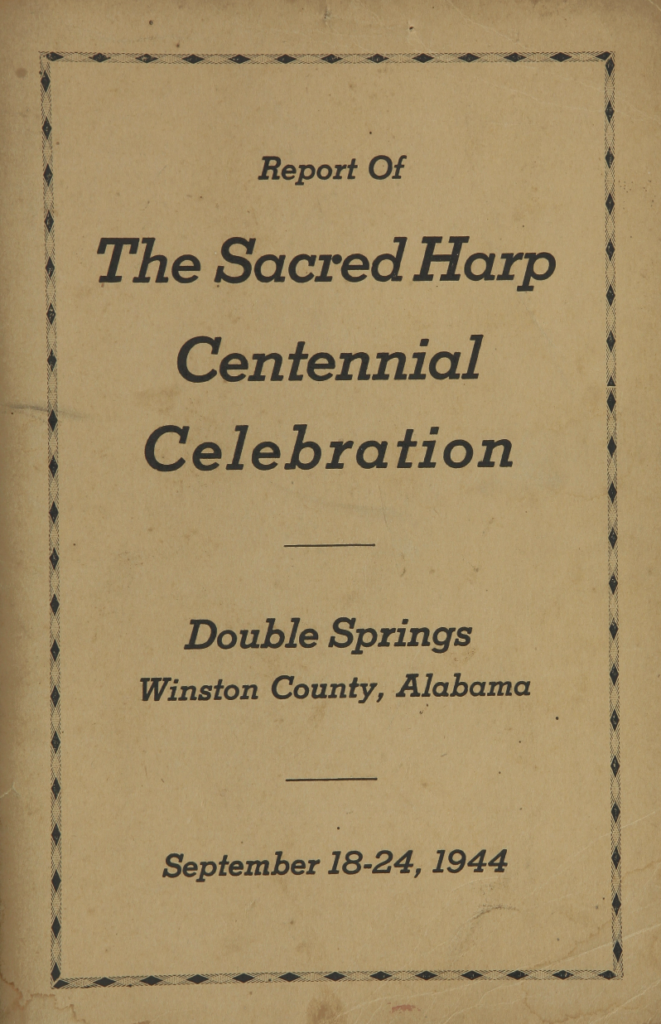
Early in Sacred Harp’s history, singing conventions published their own minutes, either in local newspapers or in their own booklets. Over time, some central conventions began including the minutes of other nearby singings in their publications. One such effort was undertaken by the Bear Creek Sacred Harp Singing Convention in North Alabama, which joined forces with other nearby conventions such as the Clear Creek, Marion County, and Rock Creek Mountain Home Conventions to published a shared booklet of regional singings. In 1944, the centennial of the publication of The Sacred Harp, the minutes of these combined groups were combined with minutes documenting an extraordinary weeklong “Sacred Harp Centennial Celebration” and a new effort to create a unified directory of Sacred Harp singers.
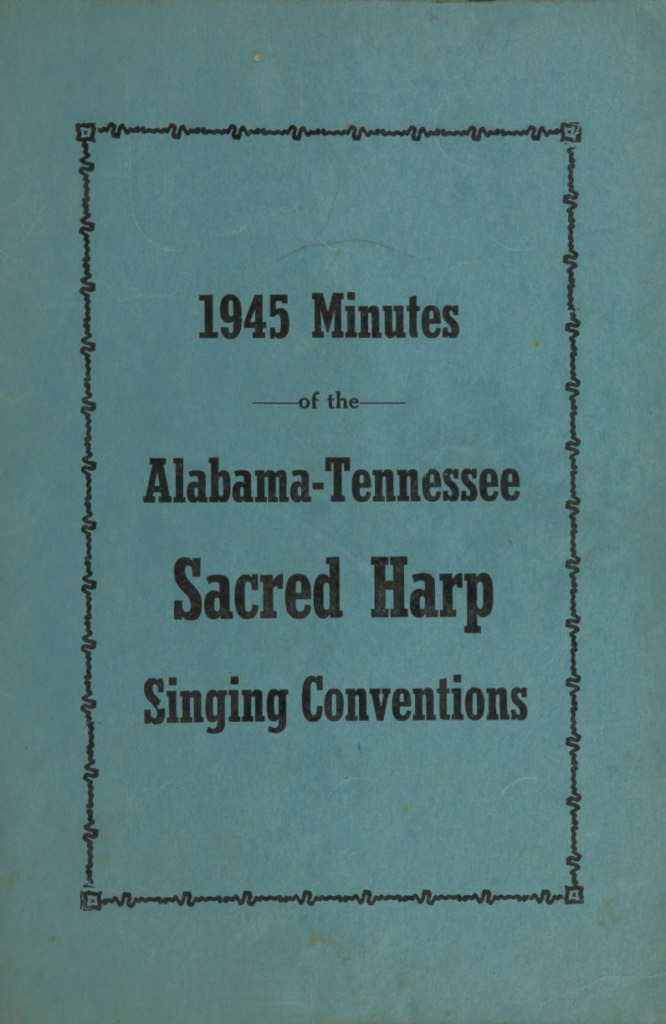
In 1945, this same group of collaborators published the what they titled the 1945 Minutes of the Alabama-Tennessee Sacred Harp Singing Conventions, the first in a series of annual publications that now covers hundreds of singings held across North America and beyond. Over the ensuing decades, the publication’s size and reach expanded as regional singing conventions contributed their minutes to this publication instead of publishing their own booklets. By 1957, it’s title, Alabama, Georgia, Mississippi and Tennessee Annual Sacred Harp Singings, documented its broadened geography. As singings spread beyond traditional areas to other parts of the United States, the publication dropped the list of states, becoming, in 1985, the Directory & Minutes of Annual Sacred Harp Singings … Throughout the United States.
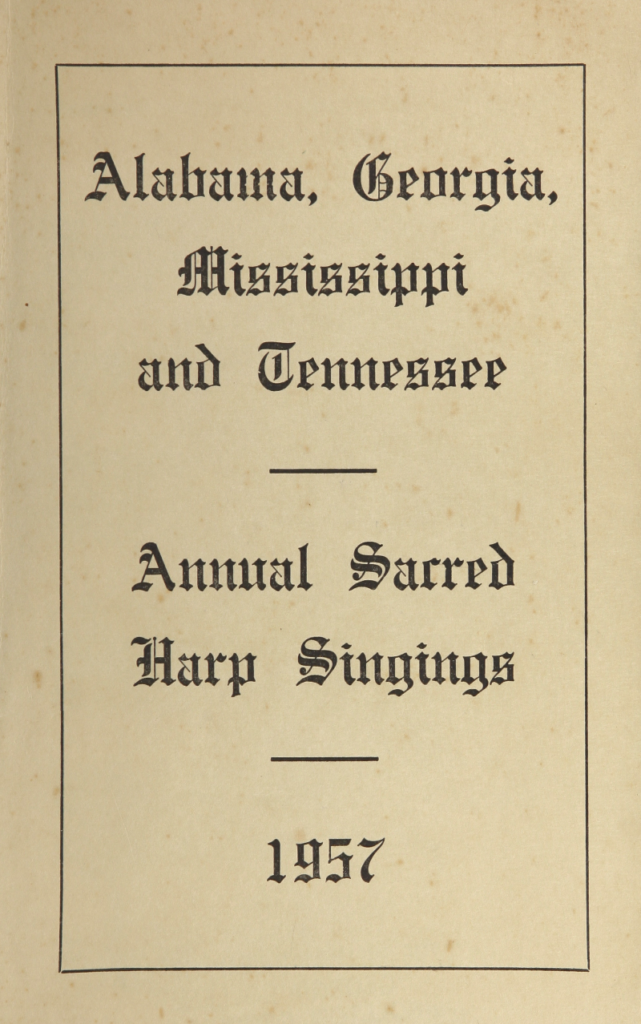
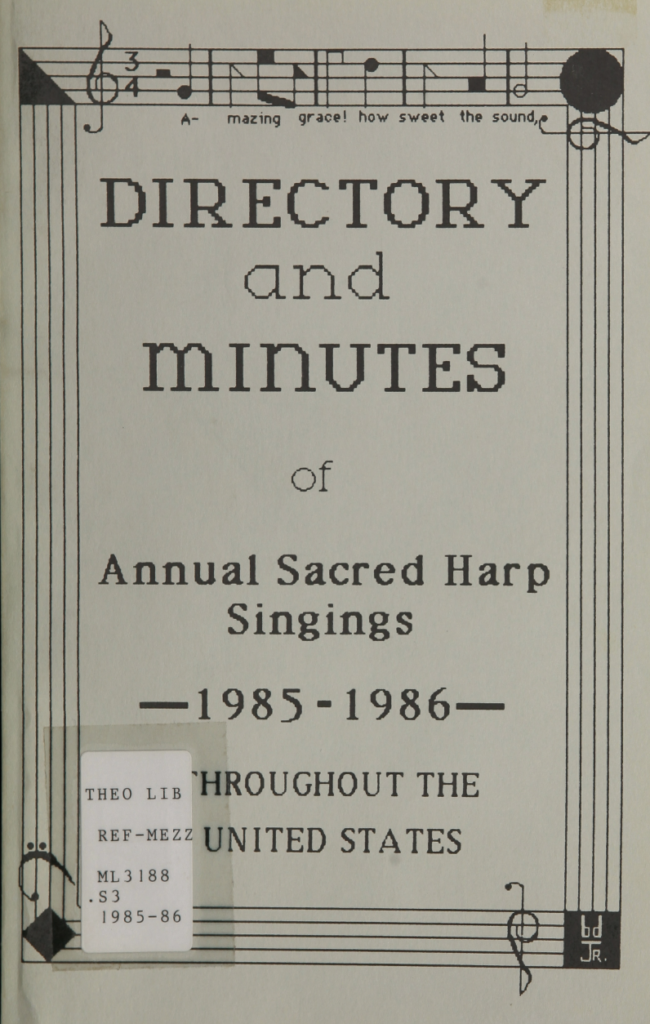
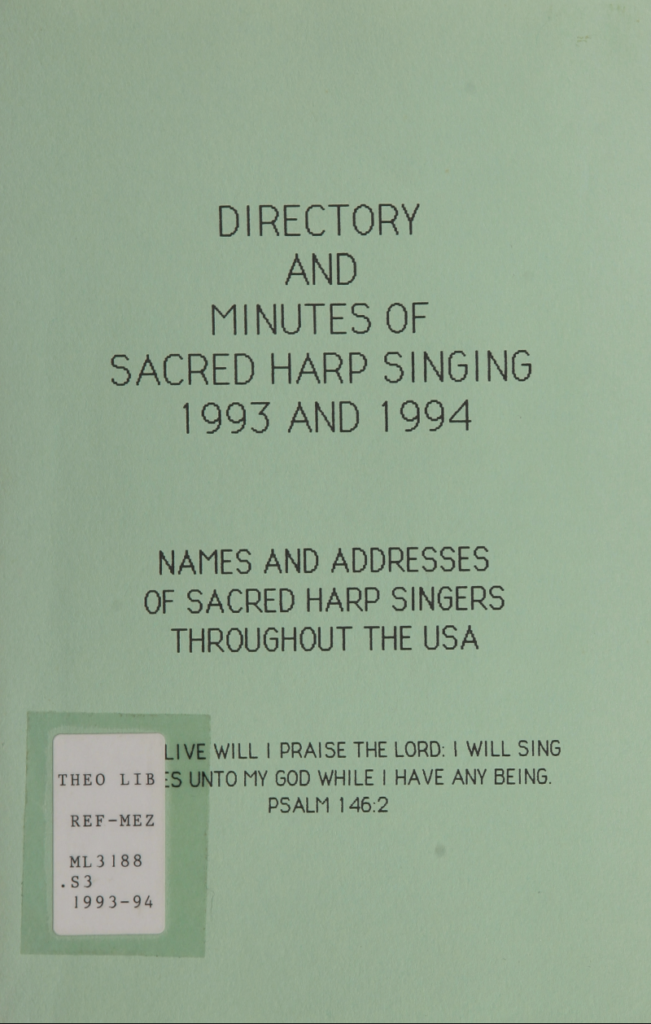
Today the Minutes and Directory of Sacred Harp Singings is a comprehensive record of Sacred Harp singings from the most widely used edition of The Sacred Harp. By locating and digitizing the fifty volumes prior to the publication’s transition to a born digital production process in 1995, we can now trace the gradual consolidation of regional groups into a central publication, map the expansion of Sacred Harp singing’s geography, and follow the leading activity of singers across decades and even generations.
This work would not be possible without the diligence of thousands of secretaries in recording and submitting minutes, and the herculean efforts of the general secretaries of the “Big Minutes,” whose jobs grew more challenging by the year. Thanks also go to the institutions and individuals who collected and preserved copies of the minutes, including Emory University’s Pitts Theology Library, the University of West Georgia, the Sacred Harp Museum, and Alabama singers Roma Rice and Margaret Keeton.
The minutes books are now being uploaded to the Transkribus platform, where they will undergo optical character recognition and await manual correction of the OCR results from project volunteers.
During the location and digitization of the “Big Minutes” volumes, we also began identifying and digitizing the smaller minutes booklets that preceded and were published alongside the “Big Minutes,” in some cases into the twenty-first century. Locating these volumes further broadens our understanding of Sacred Harp’s history, including making the story of consolidation described above possible. We are continuing to identify and digitize these smaller booklets.
Please get in touch if you have minutes booklets you would like to share or if you are interested in helping to manually correct the “Big Minutes” to help make them available to singers and for research.
Leave a Reply